
I have now finished converting my epic six-part series on my great-grandfather Arno Bierast's life and war service with Kgl. Sächs. 4. Feldartillerie-Regiment Nr. 48 into conventional web content. The links to the downloadable PDF version will remain here as well for convenience. His story was of course the original root of the obsession which eventually blossomed into the body of work highlighted on this site!
This series was originally written for Colonel Joe Robinson's WW1 German history group, for which I produced weekly pieces during the UK lockdown. You can download all six parts as PDFs from the following links.
- My Great-Grandfather's War: Part 1 (pre-war and 1914-1915) (6 MB)
- My Great-Grandfather's War: Part 2 (La-Ville-aux-Bois in detail) (9.1 MB)
- My Great-Grandfather's War: Part 3 (Schloss Belval in detail) (9.7 MB)
- My Great-Grandfather's War: Part 4 (1916-1917) (10.6 MB)
- My Great-Grandfather's War: Part 5 (January to September 1918) (8.8 MB)
- My Great-Grandfather's War: Part 6 (the final battles and post-war) (7 MB)
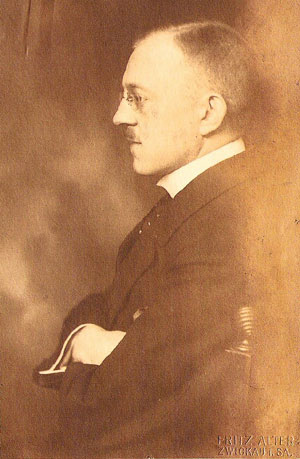
Emil Arno Bierast (known throughout his life as Arno) was born on 9th August 1889 at Zwickau in western Saxony, evidently into a solidly middle class family. His father Friedrich Wilhelm Emil Bierast had moved from the ancestral home town of Rosswein in the east of the kingdom, where he had entered the family trade of Seiler (ropemaker). He was one of two brothers, but it is not entirely clear whether Rudolf or Arno was the elder. By 1906 their father is listed in the address book for Zwickau as Werkmeister (foreman), and had evidently made his fortune. This allowed him to provide Arno with a vocational secondary education.
According to a CV prepared in 1934, Arno had attended a Höhere Handelslehranstalt with training courses at the Handelshochschule in Leipzig. He was apprenticed to the firm of C.F. Baessler in Auerbach from August 1904 to the end of 1906, continuing to work for them for a further three months as salesman and stockman. Subsequently he held a series of white-collar positions as bookkeeper and correspondent in Tangermünde and Berlin.
Reaching the age of 21 in 1910, Arno belonged to the approximate half of the annual potential intake who were passed over for peacetime active military service - perhaps simply because he wore glasses. Consequently he was probably on the books of the Royal Saxon Army as an Ersatz-Reservist, to be called up for training in the event of war.
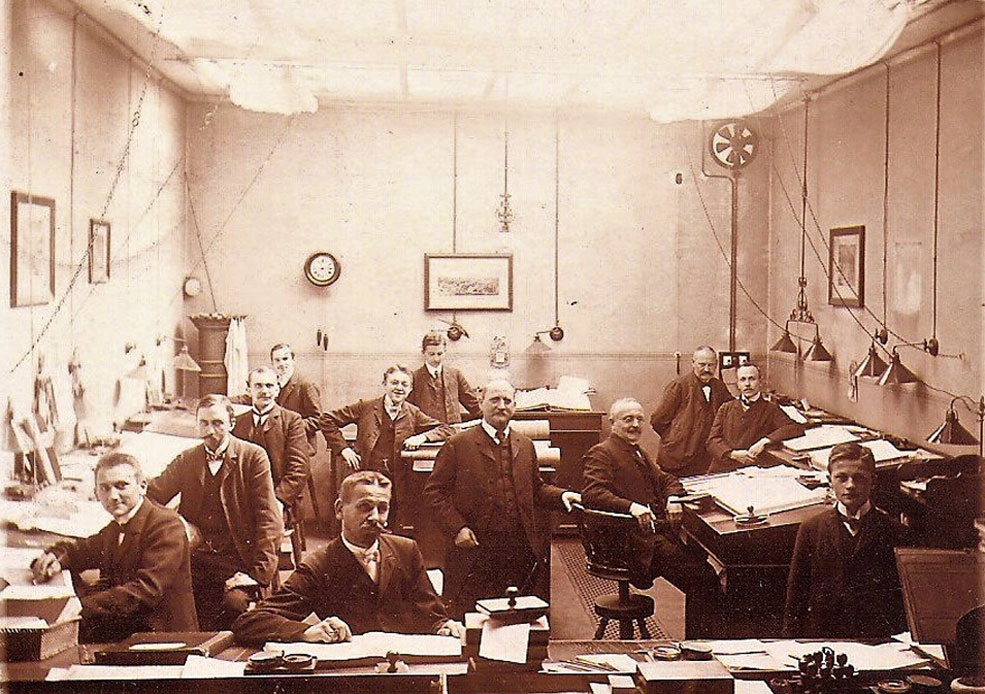
Above: Arno with his colleagues at the Zuckerraffinerie Tangermünde Fr. Meyers Sohn, where he was employed as a junior accounts clerk from 1st April 1907 to 30th September 1909. By the end of WW2 (when its owners were dispossessed by the Soviet occupation regime), this sugar refinery was the largest in Europe. The firm was nevertheless reestablished in Hamburg, primarily as a producer of chocolate, and still exists to this day under the name Zertus.
In March 1912 Arno embarked on a different adventure, travelling to the German colony of Kamerun (Cameroon) in West Africa to work for the Woermann trading company of Hamburg. Initially based at Longji on the coast, during his second year he was entrusted with the running of a Faktorei (trading post) in the interior, purchasing rubber and selling European goods. Due to the poor economic situation (Cameroon being primarily a status symbol, and never producing enough to justify the German state's investment) he was allowed to break his contract early and return to Germany in February 1914. Had he not done so, he would undoubtedly have become involved in the 1914-1916 campaign to defend the colony, though lacking any prior military experience he would not have immediately been called upon to fight.
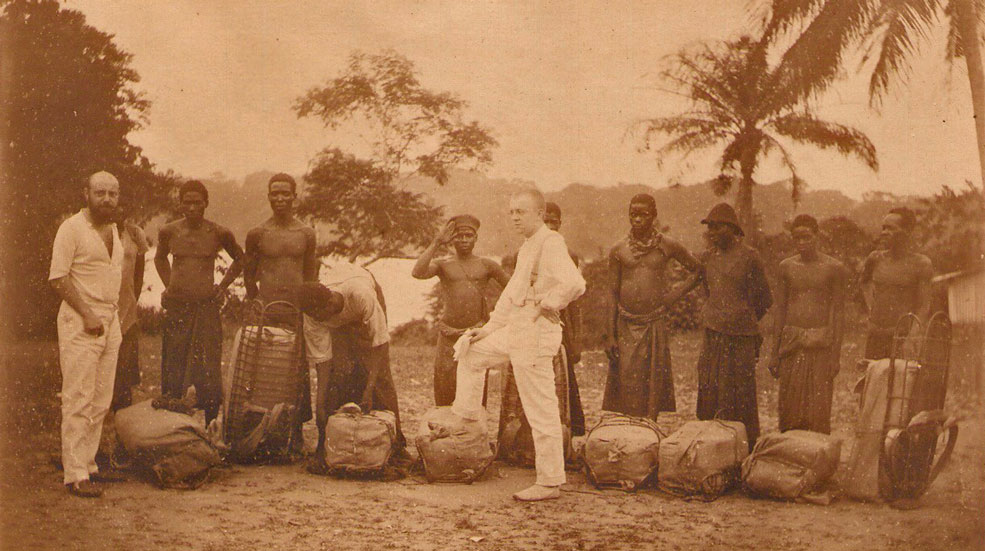
Above: Arno Bierast, his colleague Herr Schiff and native porters of a 'rubber caravan' pictured at Longji in Kamerun (Cameroon) on 2nd July 1912. Despite his evident desire to leave the continent earlier than originally planned (and contracting a recurring case of Malaria), Arno maintained a lifelong interest in Africa and continued to correspond with friends there after WW1. Besides a collection of African curios, he later acquired an African grey parrot named Jako which became a menace in WW2 due to its habit of repeating its owner's passionate denunciations of Hitler (it was eventually re-homed as a result).
At the beginning of July 1914, Arno took up a new post with a Swedish company in Helsingfors (Helsinki, Finland). There his career was interrupted by the international crisis which became the First World War, and he was forced to return to Germany to avoid Russian internment.
Rather than wait to be called up as an Ersatz-Reservist and face the prospect of service with the infantry, Arno presented himself at the barracks of Kgl. Sächs. 4. Feldartillerie-Regiment Nr.48 (henceforth, FAR 48) in Dresden on 24th August 1914 and was accepted as a Kriegsfreiwilliger (war volunteer). While eminently respectable, artillery service was significantly less likely to result in death; this decision may well have saved his life, though it would leave him hard of hearing for the rest of his life.
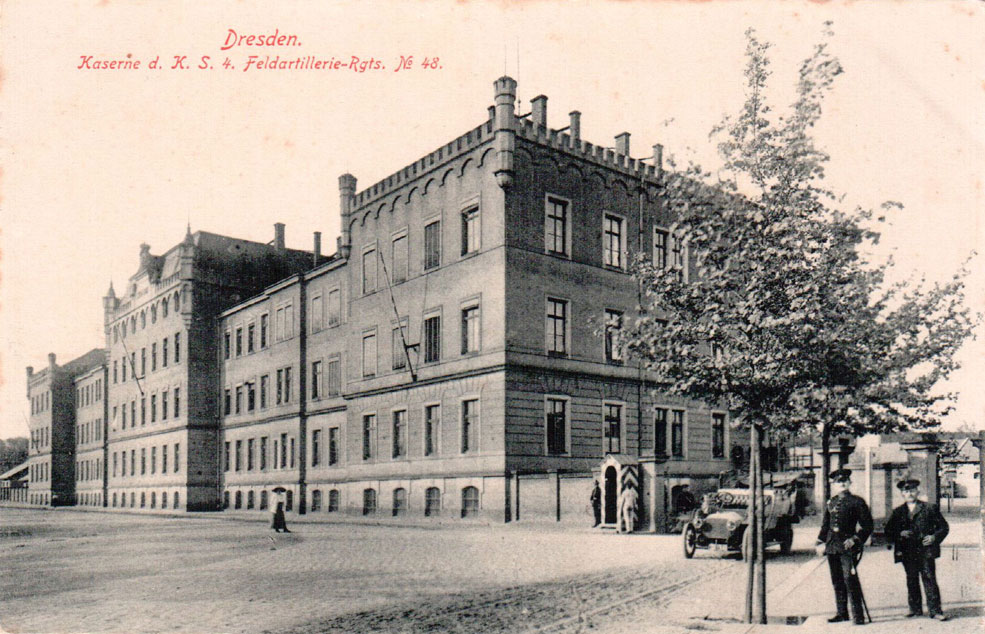
Above: the König-Georg-Kaserne, home of FAR 48 in the Albertstadt, the military district of Dresden-Neustadt (the part of the city on the north bank of the Elbe). The Albertstadt was the largest contiguous military area of any city in Imperial Germany.
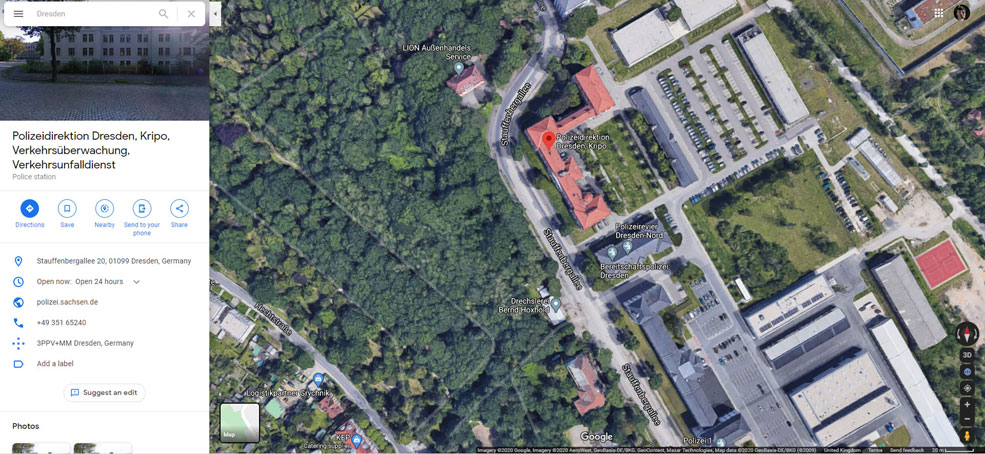
Above: unlike the historic city centre on the south bank, the Albertstadt (like nearly all military installations in the city) survived the WW2 firebombing essentially unscathed and was subsequently used by the Soviet Red Army and the armed forces of the satellite regime it established. The König-Georg-Kaserne lay abandoned for ten years after the fall of the Berlin Wall, but was subsequently renovated. Though some of the original buildings have been lost it is still recognisable today, and houses elements of the Saxon Police.
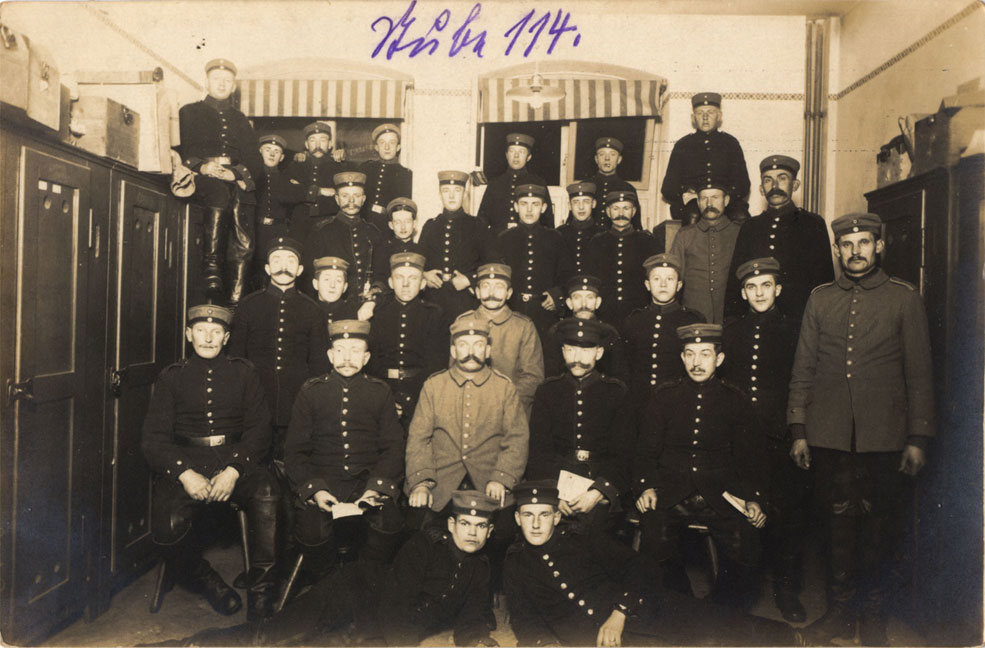
Above: group photo of the men housed in one of the many bunk rooms (Stuben) of the König-Georg-Kaserne during WW1.
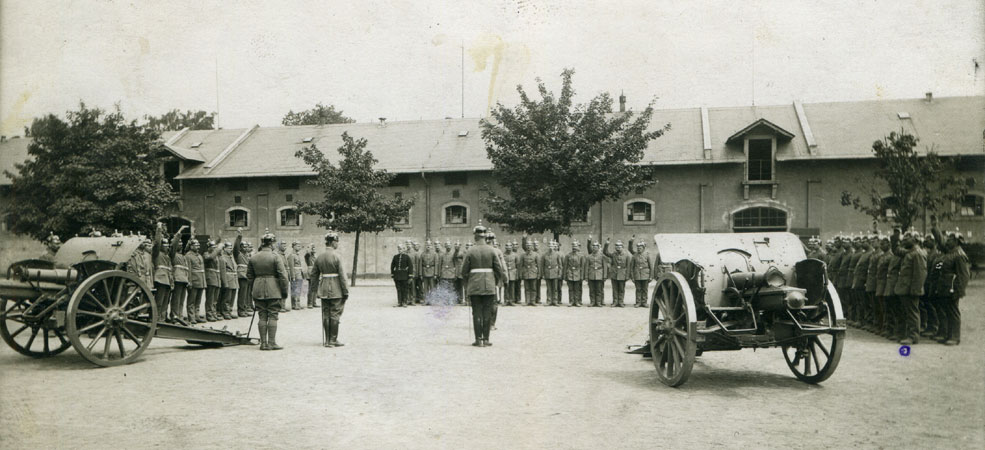
Above: oath-taking ceremony for a fresh batch of replacements in the stable yard of the König-Georg-Kaserne on Sunday 6th June 1915. While the infantry swore their oath on a battalion colour or (failing that) an officer's sword, the artillery traditionally used an artillery piece - reinforcing the belief that the honour of the regiment lay in the guns themselves.
The guns here are both 10.5cm lFH 98/09, the light field howitzers which armed the II. Abteilung (second battalion) of FAR 48 in the field. Initially only one regiment in each active Feldartillerie-Brigade possessed a howitzer battalion - the entirety of the sister regiment FAR 12 was armed with the 7.7cm FK96 n./A. field gun, despite being senior to FAR 48 (on paper, FAR 12 was the oldest regiment in Germany - having inherited the traditions of the entire Saxon artillery arm back to 26th June 1620 upon formation in 1867).
The Saxon military oath (Fahneneid) ran as follows:
"Ich ... schwöre zu Gott dem Allmächtigen und Allwissenden, dass ich seiner Majestät dem Könige Friedrich August von Sachsen während meiner Dienstzeit als Soldat treu dienen, seiner Majestät dem Kaiser und den Kriegsgesetzen Gehorsam leisten und mich stets als ein tapferer und ehrliebender Soldat verhalten will. So wahr mir Gott helfe und sein heiliges Wort, durch Jesum Christum, unsern Erlöser. Amen."
"I, (name) swear by almighty and all-knowing God that I will loyally serve His Majesty King Friedrich August of Saxony during my period of military service, be obedient to His Majesty the Kaiser and the laws of war and conduct myself always as a brave and honourable soldier. So help me God and His holy word, through Jesus Christ our saviour. Amen."
For Jewish soldiers the last line was simply "so wahr mir Gott helfe". Further variations existed for subjects of other German states (or of the Reichsland Elsass-Lothringen) serving with the Royal Saxon Army, since they were not subjects of the Saxon crown.
As an educated man who had held a series of responsible positions, Arno was promoted to Gefreiter (lance-corporal) at some point during his six or so weeks of training. Luckily for him he was not picked for the new formations of XXVII. Reservekorps which were being raised at this time, but was instead sent to reinforce FAR 48 in the field, arriving on 12th October.
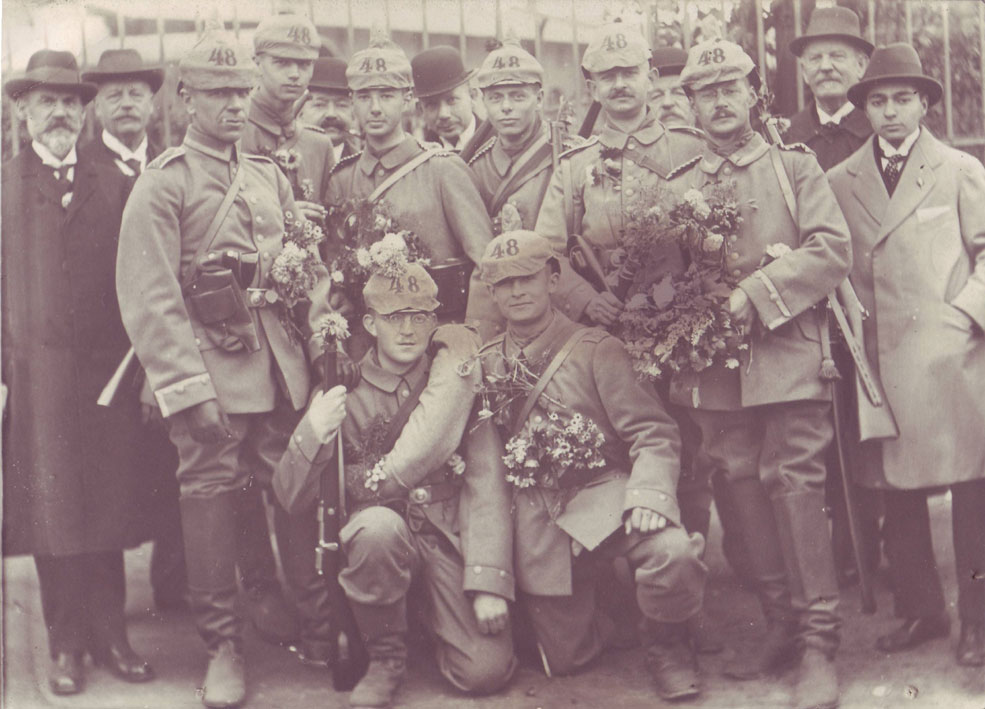
Above: Arno Bierast (kneeling, with blanket roll) and the other members of his Ersatztransport from FAR 48, accompanied by male relatives or well-wishers at Dresden-Neustadt railway station in October 1914, about to embark on their journey to France. Jürgen believes he has identified the spot where this was taken, near the long-disused railway station which took thousands of Saxon soldiers to the Western Front. In 2016 I was photographed there in my own FAR 48 uniform...
Arno was one of eight men recorded as joining the 3. Batterie / Feldartillerie-Regiment 48 on 12th October 1914, and it is tempting to equate those eight with the group we see here. The list doesn’t fit exactly as at least one other man here besides Arno appears to have the collar rank discs of a Gefreiter.
The names listed are as follows: Uffz. d. L. II Friedrich Max Kaiser, Uffz. d. R. Georg Lempe, Gefr. Emil Arno Bierast, Kan. Willy Blumenstengel, Kan. Friedrich Wilhelm Karl Adler, Fahr. ??? Edmund Jähne, Fahr. Max Friedrich Müller II and Fahr. ??? August Gustav Karl Pasold.
Four out of eight here wear the green/white piped shoulder straps of Einjährig-Freiwillige (one-year volunteers), and others may well be Kriegsfreiwillige (war volunteers) like Arno himself. The dress of the accompanying civilian wellwishers reflects the necessarily prosperous background of the Einjährig-Freiwillige, who needed to be able to pay their own way and be qualified for higher education. The 'one year' part of the deal necessarily became 'for the duration' (like the Kriegsfreiwillige) in wartime, but the option still offered the prospect of accelerated progression to reserve NCO or reserve officer status.
Arno and his kneeling comrade wear the marching boots and trousers of dismounted troops, as was the norm for Kanoniere (gunners) of the Feldartillerie at the beginning of the war. The two Unteroffiziere standing at left and right have the riding boots and breeches of mounted troops, and the one on the right is visibly wearing a sabre - likewise the norm for NCOs and Fahrer (drivers) in this arm of service. In the other German armies these mounted personnel (like cavalrymen) would be wearing a simple claw buckle, but in Saxony the belt buckle of the infantry (with crown and motto Providentiae Memor) was normally worn instead as seen here.
The major departure from pre-war regulation is their armament. The personal weapon for both Kanoniere and Fahrer of the Feldartillerie was supposed to be a revolver (the clumsy single-action M1879 Reichsrevolver) or automatic pistol (the P08 Luger, or ideally the recently introduced long-barreled LP08). This would be accompanied by an obsolete long bayonet (for Kanoniere) or a Saxon-pattern artillery sabre (for Fahrer). In summer 1914 two problems soon became apparent - demand for new pistols rapidly outstripped supply, while the Feldartillerie discovered a need for longer-ranged weapons for more effective self-defense. The latter problem had been foreseen, hence the adoption of the LP08 - but there were not yet enough of these (nor would there ever be) to issue it universally; that summer many Feldartilleristen therefore resorted to scavenging rifles or carbines from the battlefield.
Arno's photo clearly shows the acute shortage of pistols (note the Unteroffizier on the left wearing an empty revolver holster), which would subsequently be met by the government purchase and issue of all manner of civilian models. It appears that to address both of the ongoing problems with personal weapons in the Feldartillerie, Arno and his comrades have been issued initially with obsolescent K88 and G91 carbines (from the stocks of the Fussartillerie, cavalry or Train) in lieu of pistols. Arno himself has a G91, a version of the K88 modified for Fussartillerie issue with the addition of a stacking hook below the muzzle.
Later photos from FAR 48 show extensive issue of the Mauser C96 among less recognisable types; newly manufactured stocks of the LP08 were also issued. It would also become the norm for a Feldartillerie regiment to keep a modest stock of rifles or carbines on hand for the defense of forward gun positions, sentry posts etc.
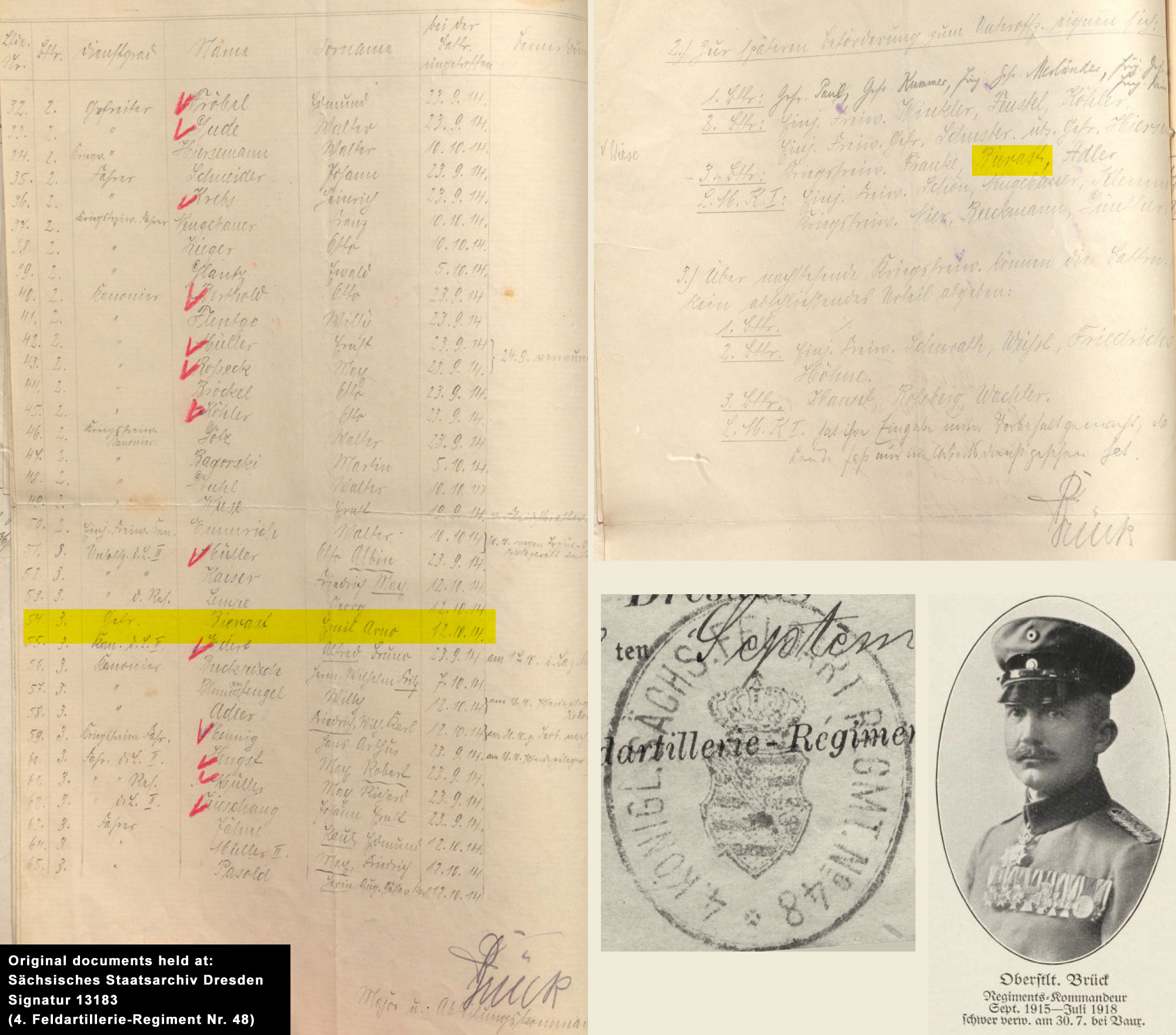
NB: click the image to open it at full size in a new window.
Above (left): record of Arno’s arrival with the 3. Batterie / Feldartillerie-Regiment 48 in the field on 12th October 1914, taken from the regimental personnel files.
Above (right): an autumn 1914 assessment of all volunteers with the I. Abteilung (1., 2. and 3. Batterie plus leichte Munitions-Kolonne) of FAR 48 for suitability for promotion to Unteroffizier. Arno is rated as suitable, though in fact - so far as we have been able to determine - he served for the duration without ever rising higher than Gefreiter (I greatly regret getting this wrong in the first edition of Fighting the Kaiser's War due to misinterpretation of a photo from 1916 wherehe seemingly has the larger collar buttons intended for the rank of Sergeant upwards).
Above (inset): Oberstleutnant Karl Brück, commander of FAR 68 from September 1915. In autumn 1914 Brück commanded I. Abt. / FAR 48 with the rank of Major, in which capacity his signature appears on these documents.
Until the end of 1916, FAR 48 belonged to 23. Infanterie-Division of XII. Armeekorps. It had fought at Dinant and on the Marne before the corps established itself north of Reims (at the southern end of the Chemin des Dames) in September. By the time Arno arrived most of the corps front was quiet, and would remain so (with some brief interruptions) until FAR 48 was sent to the Somme at the end of September 1916. Although all of Arno's surviving wartime photos are from this front, we know that he served with the regiment until demobilisation.
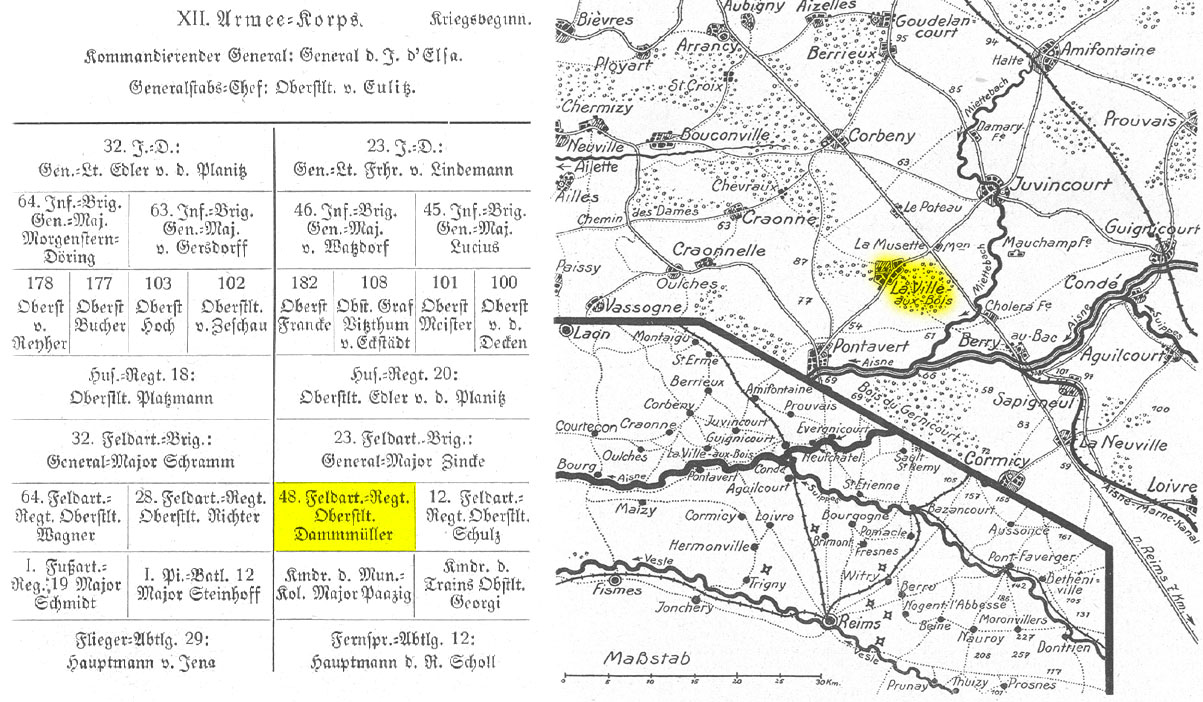
NB: click the image to open it at full size in a new window.
Above (left): order of battle for XII. Armeekorps at mobilisation, showing FAR 48 as part of 23. Feldartillerie-Brigade within 23. Infanterie-Division. Both this and the map are taken from the second volume of Sachsen in Grosser Zeit, the Saxon semi-official history of the war.
Above (right): the area held by Saxon XII. Armeekorps from autumn 1914 until autumn 1916, when it was finally committed to the Battle of the Somme (to which elements had been sent as reinforcements since July).
The front line was roughly Craonne - La-Ville-aux-Bois - Le Cholera (Cholera Ferme) and was anchored on the Aisne at Höhe 108 southeast of French-held Berry-au-Bac. Arno's battery was deployed near the road between Corbény and Juvincourt, in support of Schützen-Regiment 108 at La-Ville-aux-Bois.
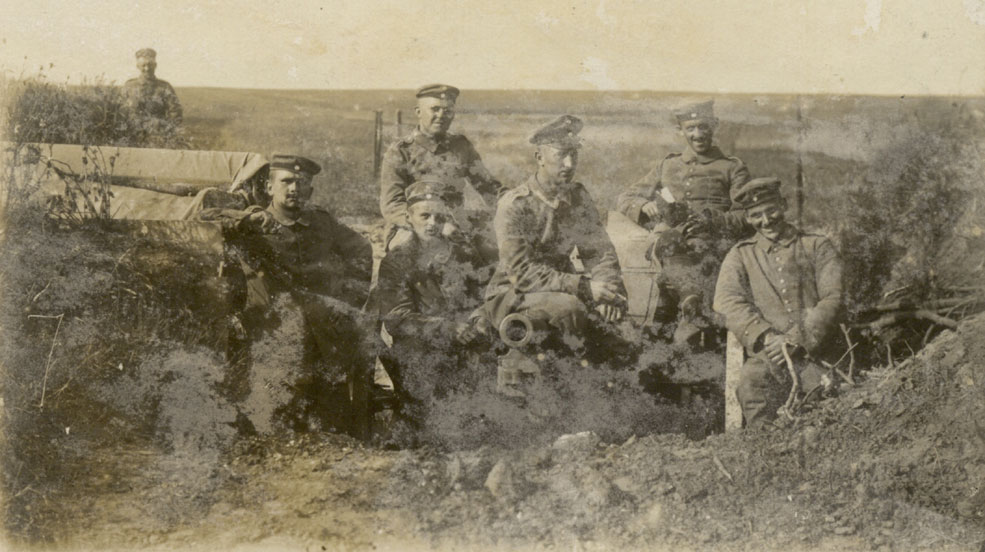
Above: Arno as a crew member of 4. Geschütz (number 4 gun) of 3. Batterie / Feldartillerie-Regiment 48, deployed in a rough open firing position near the Corbény-Juvincourt road in May 1915. The other members of the crew are named (if I interpret his handwriting correctly) as Hoffmann, Forster, Lemke, Hübler, Dietzdorf and ??? (something ending in -ke?). It is not apparent which was the Unteroffizier in command, seen here seated on the gun barrel. As Gefreiter, Arno would have been his immediate deputy.
This gun position is laid out 'by the book', with the ammunition caisson to the right of the gun. By the time the Saxon XII. Armeekorps left this front to take part in the Battle of the Somme in 1916, such crude open positions had long been replaced by reinforced concrete gun bunkers.
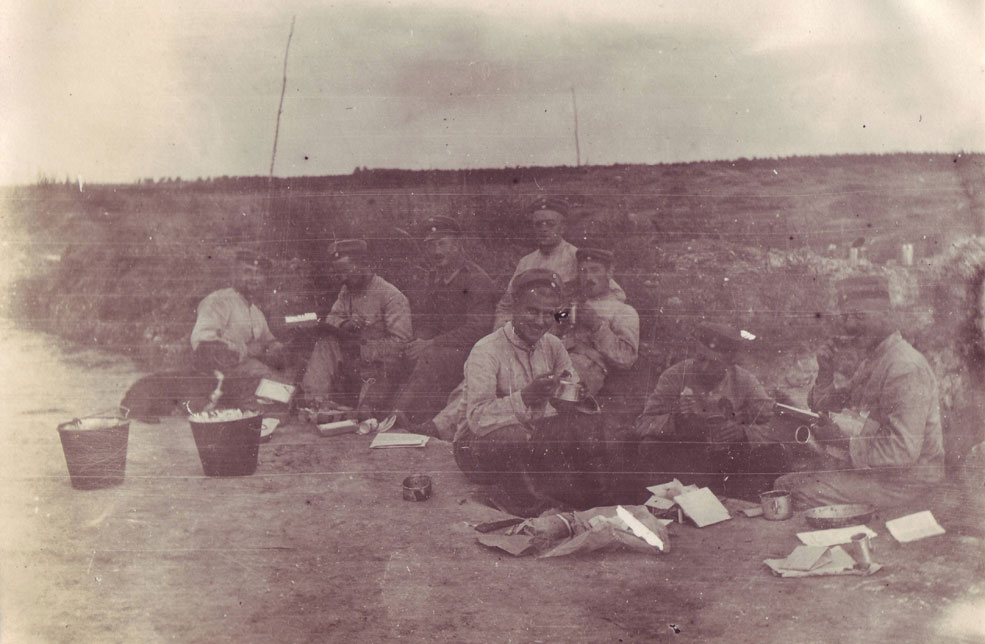
Above: Arno, his Unteroffizier and other comrades from his battery having a meal alongside what is most likely the Corbény-Juvincourt road (sadly this one is undated). The overgrown rampart of chalky earth behind them may be part of the same fire position or its associated crew dugout.
All except the Unteroffizier are wearing the jacket (and in most cases, the trousers) from their white fatigue dress. This was designed to be easy to clean, and commonly worn for dirty jobs behind the lines to save wear on the Feldgrau uniform. During 1915 it was recognised that the brilliant white jacket and trousers needed to be camouflaged (for instance against aerial observation), and they started to be dyed in darker shades as a matter of routine.
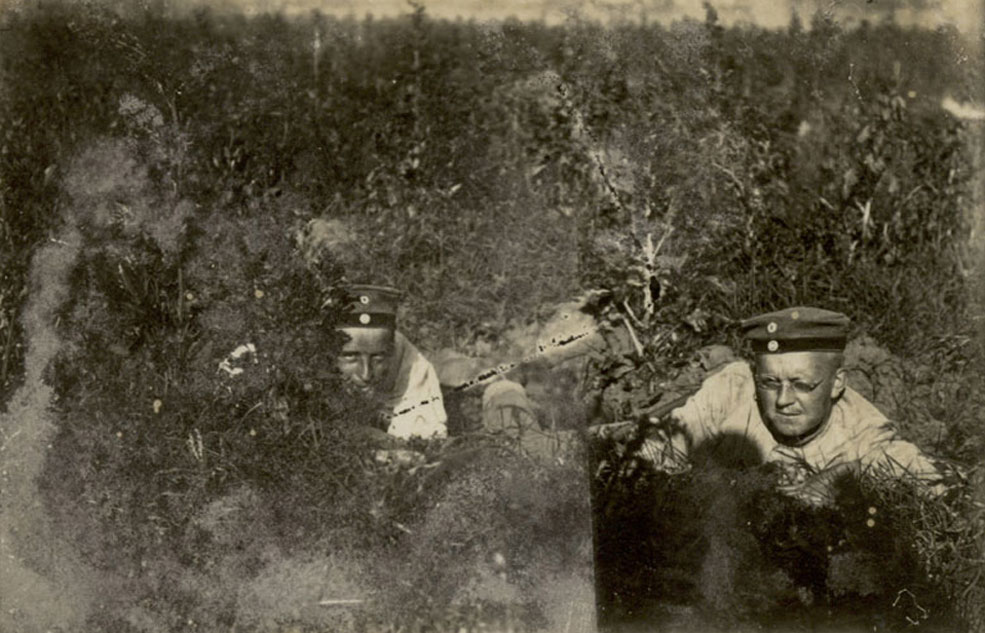
Above: Arno and another member of his gun crew, "among the turnips[?!] during the cladding of the first enlisted men's dugout". I believe that this most likely shows the construction of a crew dugout for the same battery position near the Corbény-Juvincourt road as seen in the previous two photos.
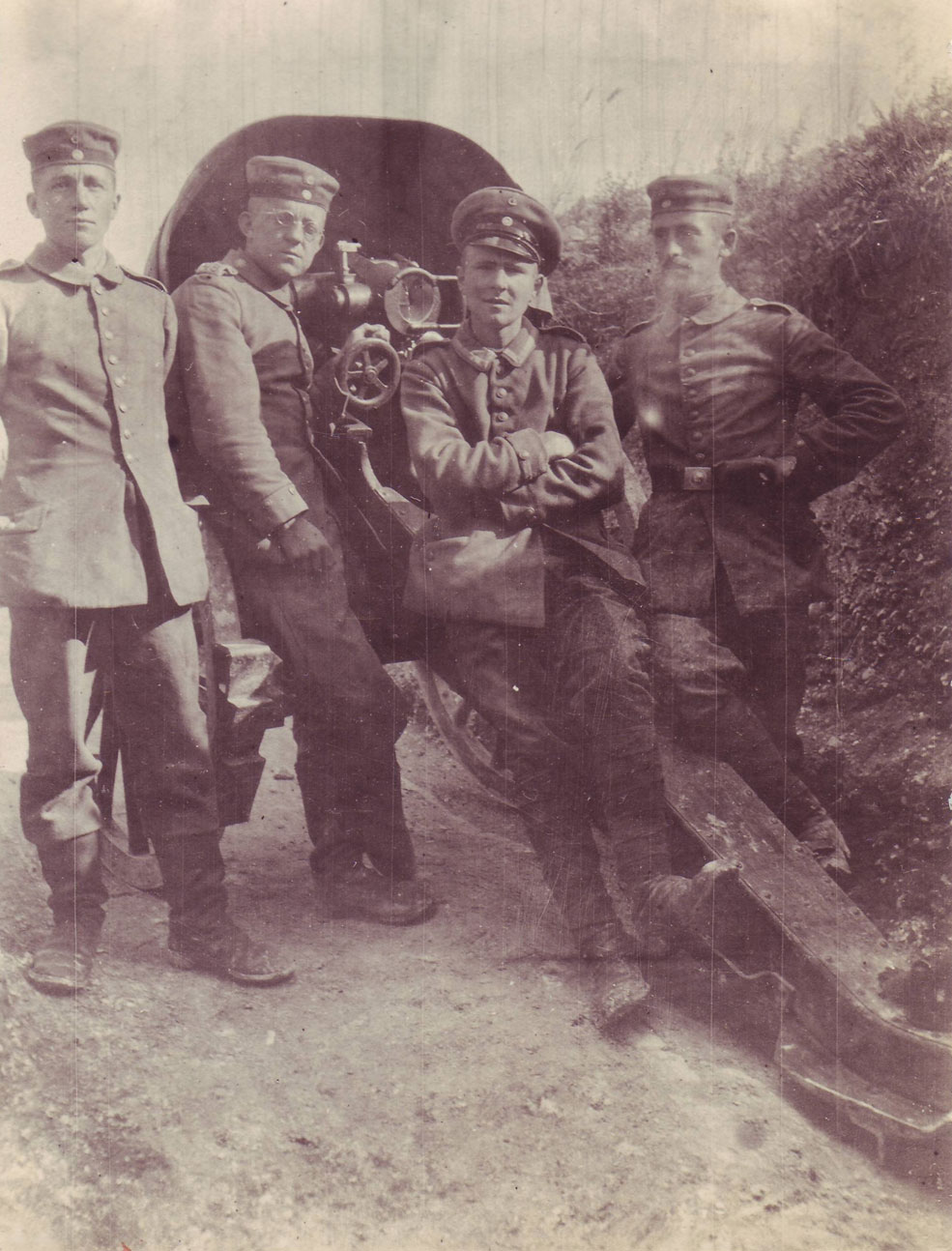
Above: Arno, his Unteroffizier (perhaps not the same man as before, as this one is clean-shaven and has unabbreviated NCO rank braid on his collar) and comrades with a captured Belgian fortress gun (Canon de 5.7 cm Maxim Nordenfelt M 1888). Most regrettably this one too is undated.
This weapon was designed by the British firm of Nordenfelt for the close defence of fortresses, and purchased in large quantities before the war by both the Belgian and Russian governments. Captured Belgian guns were reissued by the Germans in 1915 as a 'trench gun' to help defend the infantry positions. Because this piece had been designed for operation in confined spaces, it was later chosen as the main armament both for the German-built A7V tank and for captured British Mk IV Male tanks refitted by the Germans.
The published history of FAR 12 indicates that they received two of these guns on 27th March 1915, and one was given to each of its two Abteilungen; the crews were formed by the Abteilungen themselves from their existing personnel, and given a course of training on the new weapon. I presume that FAR 48 received its own 5.7cm guns around the same time.